


Osteoarthritis of the Knee

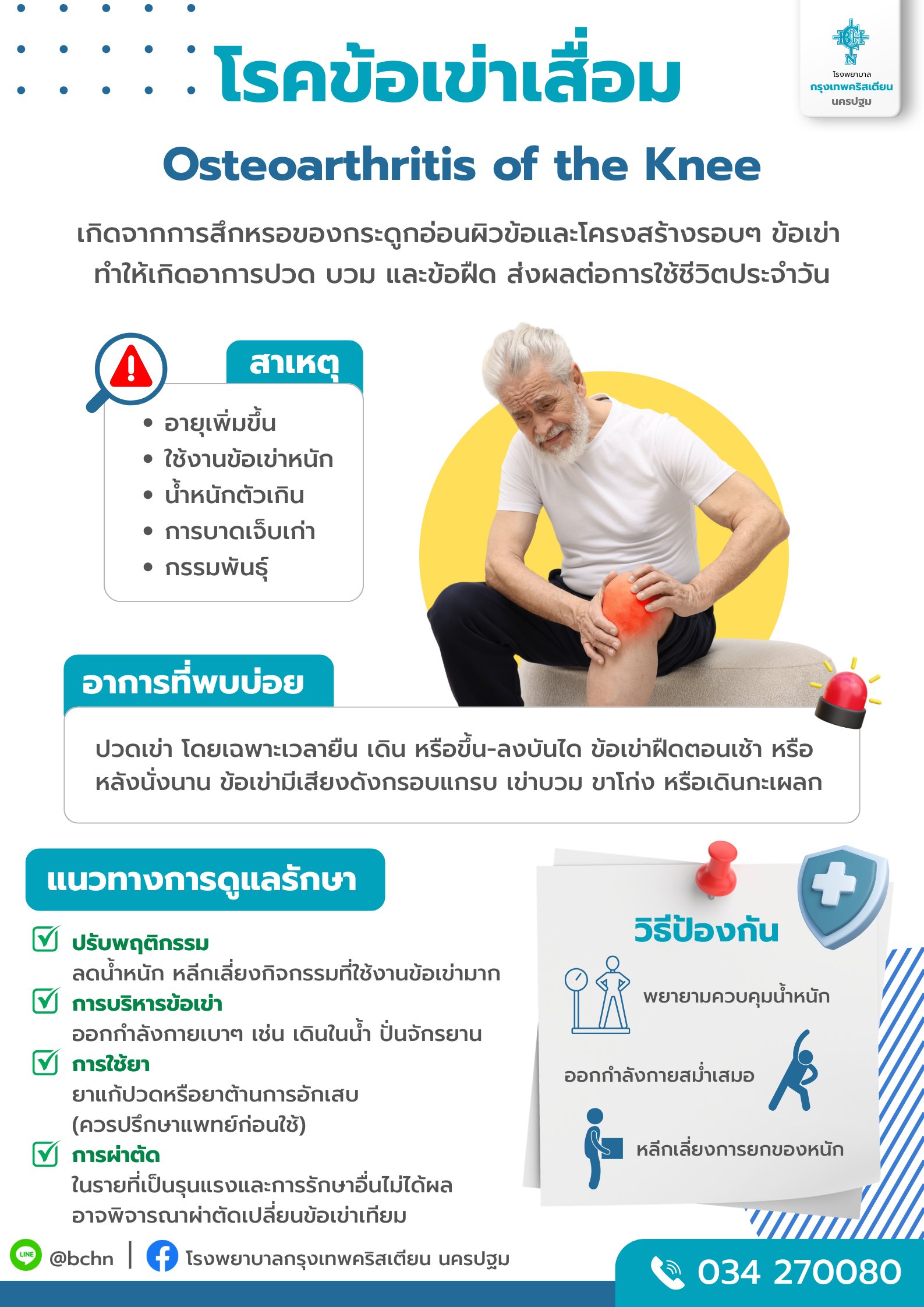
Osteoarthritis is a disease caused by the deterioration of cartilage in the knee joint, causing pain, swelling, or a crackling sound when moving. It is often found in older people or people who are overweight, including those who have had knee injuries or have activities that use the knee joint heavily for a long time (Mayo Clinic, 2023). Symptoms to watch out for include knee pain when going up and down stairs, sitting for a long time and having difficulty standing up, or stiff knee joints after waking up.
Treatment for osteoarthritis begins with behavioral adjustments, such as controlling your weight, exercising to strengthen the muscles around the knee, and avoiding overuse. Your doctor may also recommend medication to relieve pain or injecting a knee lubricant to reduce joint friction (World Health Organization, 2022).
For patients with severe knee osteoarthritis and non-surgical treatments have not been effective, our hospital offers Total Knee Replacement , a procedure that helps restore movement, reduce pain, and improve the patient’s quality of life, allowing them to return to normal daily activities. Our team of expert surgeons and state-of-the-art equipment ensures that patients receive safe and effective treatment.
If you or someone close to you has persistent knee pain or suspect that you have osteoarthritis, you can consult a specialist for a proper diagnosis and treatment plan at our hospital.
Frequently asked questions
Q1: Who should consider knee replacement surgery?
A: People who have severe osteoarthritis, chronic knee pain, and non-surgical treatments have not been effective, or whose quality of life has decreased due to osteoarthritis.
Q2: Is surgery safe?
A: Knee replacement surgery is very safe when performed by an experienced surgeon and with proper pre-operative preparation and post-operative rehabilitation.
Q3: How long is the recovery period after surgery?
A: Patients can generally begin moving and walking with a cane within 1-2 days after surgery, and full recovery usually takes 6-12 weeks, depending on health and following your doctor’s instructions.
Q4: How many years can a knee prosthesis last?
A: Modern knee prostheses can last 15-20 years, depending on the patient’s activity, care, and weight.
Q5: Are there any risks or side effects?
A: There may be risks, such as infection, bleeding, or problems with the artificial joint, but the chance of complications is low if you follow the advice of your medical team.